
Back in March, the Formula One circus rolled into Melbourne with all the fanfare that the behemoth of global motorsport commands. The opening round of the season was a blast – a three-day festival of speed that, if you are a fan of the sport, should be top of the bucket list of events to attend.
However, while Formula One was unquestionably the headline act, for sheer wheel-to-wheel entertainment, the supporting Supercars that shared the Albert Park circuit for a round of their own series arguably stole the show. Across four bruising races, there was epic vehicular brawling that made it fantastically entertaining. It was aggressive and unpredictable, and a potent reminder that while Formula One might bring the global glamour, Australia’s premier racing category can deliver a spectacle every bit as compelling.
The drivers are responsible for much of this spectacle, and they are skilful indeed and deserving of the plaudits they receive. But what happens on track is only the most visible part of a massive team effort – behind that driver is a team of engineers, mechanics and specialists, all working together to extract every fraction of a second from the car.
And sitting at the centre of much of this activity is the race engineer – the person who is the technical link between the driver and the team, analysing every detail and responsible for getting the best possible performance from a racing car and its driver.
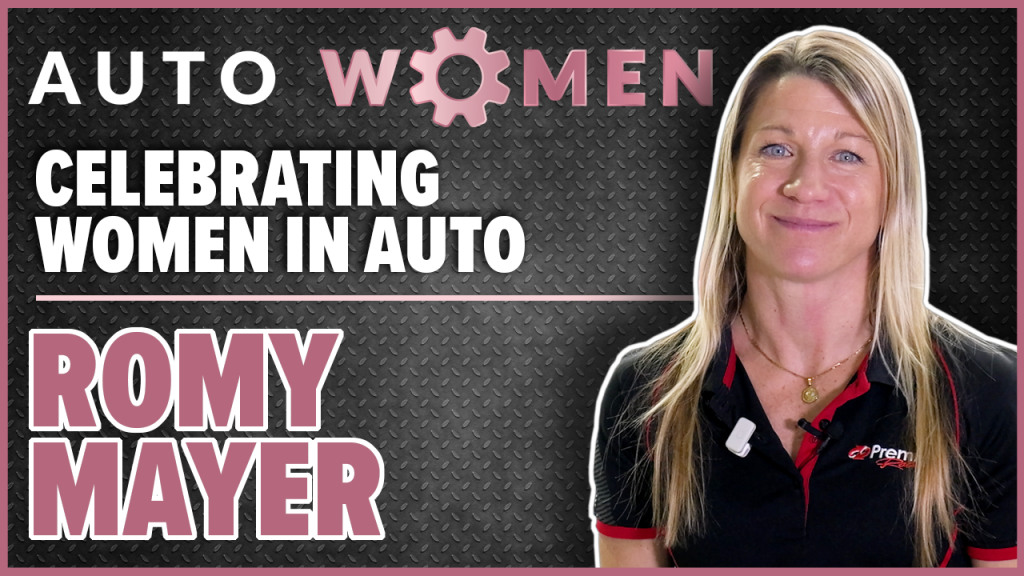
For Romy Mayer, race engineer at the PremiAir Racing Supercars team, it is a role that combines engineering expertise, data analysis, strategy, communication, decision-making and, when required, even a little psychology.
“My role as a race engineer involves operating and managing all kinds of aspect of the race car, not only at the workshop, but also at test and race events,” she explains.
“The job is kind of divided into three aspects – as the main team hub where I communicate with the team, and the on-track and off-track responsibilities.”
Those responsibilities are plentiful. At the workshop, preparation for a race includes analysing data from previous races, running simulations, determining which settings and components might best suit the next circuit, ensuring the car is compliant, and collaborating closely with others in the team to make certain no detail has been overlooked.
“We have meetings with the other race engineers to get their inputs, their thoughts and to bring everyone on the same page so we are ready for the race weekend,” says Romy.
At the circuit, the team walk the track looking for changes to the surface, kerbs and other features before practice provides the opportunity to test settings and complete final preparations to the car for qualifying. Even then, there is much still to be done – while qualifying day is about extracting maximum performance for a single lap, race day is a separate beast.
“The race is quite different from what an engineer does on the previous day,” says Romy. “It’s much more about race strategy and pit crew communication than just single car speed . . . it’s all about the strategy – getting a car running well for a whole race, not just for one lap.”
Throughout the weekend, the relationship between driver, car and engineer is crucial and during the race, that relationship becomes even more important. The engineer is the voice in the driver’s ear, communicating information about competitors, strategy, Race Control messages, and more while simultaneously monitoring telemetry, tyre performance, weather and even television coverage. Romy typically has several screens displaying all this information.
“Each screen has its own data, and they’re always set up the same so it’s like a muscle memory when you need to look for them – especially during the race itself when you need to make decisions within a split second,” she says.
And decisions sometimes do have to be made in a split second. An incident spotted on the television feed might mean a Safety Car is imminent. That could make an immediate pit stop pretty advantageous. Weather can change, tyres can deteriorate and the job is to separate valuable info from the noise and make the best decision. Not surprisingly, this is a demanding, stress-filled time – but exciting too.
“The pressure is very high on race day,’ says Romy. “There is a lot involved because everyone, the whole team, has worked towards that moment and once the light goes out you can really feel the adrenaline in the garage.
“I usually go into my zone, like a bubble, and you’re fully focused on what you’re doing, on the screens and on all the numbers coming in . . . You need to take
all the information in.”
The focus on data and information must, however, leave room for another aspect of the race engineer’s role.
“. . . the race engineer is also, I feel, like a mental support voice in the driver’s head,” says Romy. “When they’re on the track battling and they are stuck or if they get overtaken, you are also the motivator to keep going and push forward.”
JOURNEY TO THE STARTING GRID
Romy’s career has taken her across the world from Germany to Australia and to racetracks throughout Europe and Asia, working in DTM, GT3, Super2 and Supercars and alongside some of the biggest names in the sport. But her journey to the Supercars paddock was anything but planned.
Growing up in Germany, Romy did not come from a racing family. There were no relatives competing at weekends or working in the garage, trying to squeeze a smidge more performance out of a car. However, living in Stuttgart meant she grew up in the heart of one of the world’s great automotive regions – one that is home to manufacturers such as Mercedes-Benz and Porsche. Perhaps more important than that for the young and impressionable Romy was Formula One and, in particular, the superstar of the planet’s premier racing series.
“. . . it was the time when Michael Schumacher was racing, and a typical Sunday afternoon meant the F1 was on and the whole family was watching together,” she says.
While her interest in automotive – not just racing – was flickering into life, Romy went on to study industrial engineering and complete an internship with Mercedes. It was there, watching the technical and design work happening around her, that her ambitions changed and she shifted her studies to automotive engineering. This switch would bring with it Romy’s first close contact with racing through her university’s Formula Student program – a program that required university teams to design, build and compete with a single-seat racing car. It would be the beginning of Romy’s motorsport career.
“I had the idea of working for Porsche or Mercedes, building and designing road cars, but during my studies I joined that Formula Student team,” she says.
“I got interested in motorsport, was watching more motorsport, realised all the jobs roles which are involved in motorsport, and that sparked my interest.”
FROM DTM TO AUSTRALIA
After completing her studies. and with motorsport now very much on her mind, Romy secured a junior data engineering role with Mercedes Motorsport and entered the fiercely competitive world of DTM – Germany’s premier touring car championship and one of Europe’s top motorsport series.
Over the next five years she worked as a data and performance engineer and as driver performance engineer for British racer Gary Paffett. She would go on to work with HWA, a motorsport and high-performance engineering company with links to Mercedes, as it developed the Mercedes-AMG GT3. Romy volunteered to join the development program as a performance engineer and travelled with the team to circuits across Europe developing the car – an experience that introduced Romy to other types of motorsport series and encouraged her to look beyond DTM. While Europe looked the likely spot to develop her career, there was a meteorological snag that made it tempting to look further afield.
“I had always dreamed of working in Formula One and did some applications there, but I remember that it was supposed to be a summer day in Germany in June, and it was like 14 degrees and raining,” says Romy with a smile. “I was thinking, ‘I’m sick of this weather and of living here,’ and I also knew that F1 teams are all in England and it wouldn’t be much better there!
“I had heard about the supercars in Australia, did a bit more research, and sent my CV by email to Red Bull Racing.
“The next Monday I got an answer from the team manager – who is still the team manager, Mark Dutton – did some Skype interviews and three months later I was in Australia!”
A NEW START
It was 2015 when Romy packed up and moved across the world to join Triple Eight Race Engineering / Red Bull Ampol Racing. Success came quickly. She worked as a data and performance engineer on Jamie Whincup’s car and, in 2017, was part of the team that secured Whincup his record 7th Supercars drivers’ championship.
In 2019, came another major career step. Triple Eight launched a GT3 program in Asia in partnership with Johor Racing, and Romy put her hand up to become race engineer. It was her first opportunity to take responsibility for a car in that role. She also worked for Triple Eight’s Super Two team in 2019 helping driver Kurt Kostecki secure second place in the championship. Her career in motorsport was now well established.
Romy became a mother for the first time in 2020 and returned from maternity leave in 2021 to take on another GT3 opportunity, helping the Triple Eight/Johor Motorsports team to victory in the GT World Challenge Asia series in 2022. At the end of that season, she was keen to return full-time to Supercars and remain with her young family in Australia. The opportunity to do that came in 2023, and Romy joined PremiAir Racing – the Gold Coast-based Supercars team established by businessman and Top Fuel racer Peter Xiberras the previous year.
Moving from the powerhouse Triple Eight organisation to a much younger team represented a significant change and challenge, as well as the opportunity to help build something special. And the work from everyone involved at the fledgling outfit began to pay off in 2024, with the team scoring a pole position with driver James Golding at the Supercars series Darwin round. For Romy, that achievement validated not only the work being done at PremiAir Racing but, her decision to leave an established championship-winning operation.
“That was that moment where I realised, yes, that decision was right,” she says.
Later that year came another milestone at the Sandown 500 with Golding and co-driver David Russell finishing third, delivering PremiAir Racing its first Supercars podium.
“These moments, the pole position and the podium, when everything comes together and you’re up there – it’s the biggest reward for all the hard work, not only for the race car driver . . . but for the whole team that worked all those months towards that moment.”
THE NEXT CHAPTER
Having welcomed her second child in 2025, Romy is again balancing motherhood with the demands of professional motorsport, and her immediate ambition is to return to a full racing program. Beyond that and the determination to drive PremiAir Racing to continued success, there are pathways out there that might be of interest.
“I do still explore other series here and there,” she says. “Just recently I did a one-off round in the Mustang Cup with Radburn Racing. They have an all-female racing team – mechanics, truck driver,
race driver and me – and I was able to bring my son for the weekend as well. That ticked all the boxes obviously!
“Long-term goals are to keep working at the highest level possible. In Australia, that’s Supercars, but exploring options in Asia like the Super GTs in Japan has been on my radar. One day I would like to do a season there.”
WOMEN IN MOTORSPORT
While Romy has built a career that has taken her to the highest levels of motorsport, she acknowledges that establishing herself in a male-dominated environment was not always straightforward.
“As a woman, it’s not always easy, especially as a young woman,” she says. “Stepping into it can be quite daunting.”
However, today she sees a different landscape to the one she navigated. More women are entering motorsport and social media has made those already in the industry far more visible and accessible. Initiatives such as FIA Girls on Track and Auto Women also provide opportunities for women to meet, build networks and discover career pathways they may not previously have considered. For Romy, these are important developments, as is the visibility of the careers available in motorsport.
“Sometimes, young women overlook motorsport for a career but there actually are so many jobs or roles within a racing team which you might not see directly on the TV,” she says. “Not only are there the mechanics and the drivers, but there are also numerous engineers . . . and then there are all the other roles like physios, marketing, journalism. This is all part of a race team.”
Having successfully moved through the motorsport environment herself, Romy says that confidence and perseverance are crucial qualities for anyone looking to make the sport their career. Recognising opportunities that might arise is useful too, she adds.
“In my early years in motorsport, I doubted myself quite a lot,” she says. “There’s a lot of ego in motorsport, and you kind of get thrown around with your ideas and data that you analyse and want to bring up. Believing in your skills, believing in yourself, is essential.
“What I would tell my younger self is to stand up for yourself and don’t get hung up too much on certain situations or even certain ideas. I mentioned before that I had a dream of working in Formula One. I always looked in that direction, not realising there is the world of supercars which actually has really cool racing! The race series is amazing. I would say you get to do much more race engineering than if you go from one F1 race to another . . . So sometimes new opportunities, or different opportunities, which might not look like the perfect way to your goal, might open more doors than you think.”
It is a lesson she hopes young women considering automotive, engineering or motorsport careers will take on board, and her final words of advice reflect that lesson.
“If you are interested in cars or racing, have a look on the racetrack, meet us there, and see if there’s anything for you there. Don’t feel afraid to step into it – there are a lot of opportunities and pretty cool jobs!”